
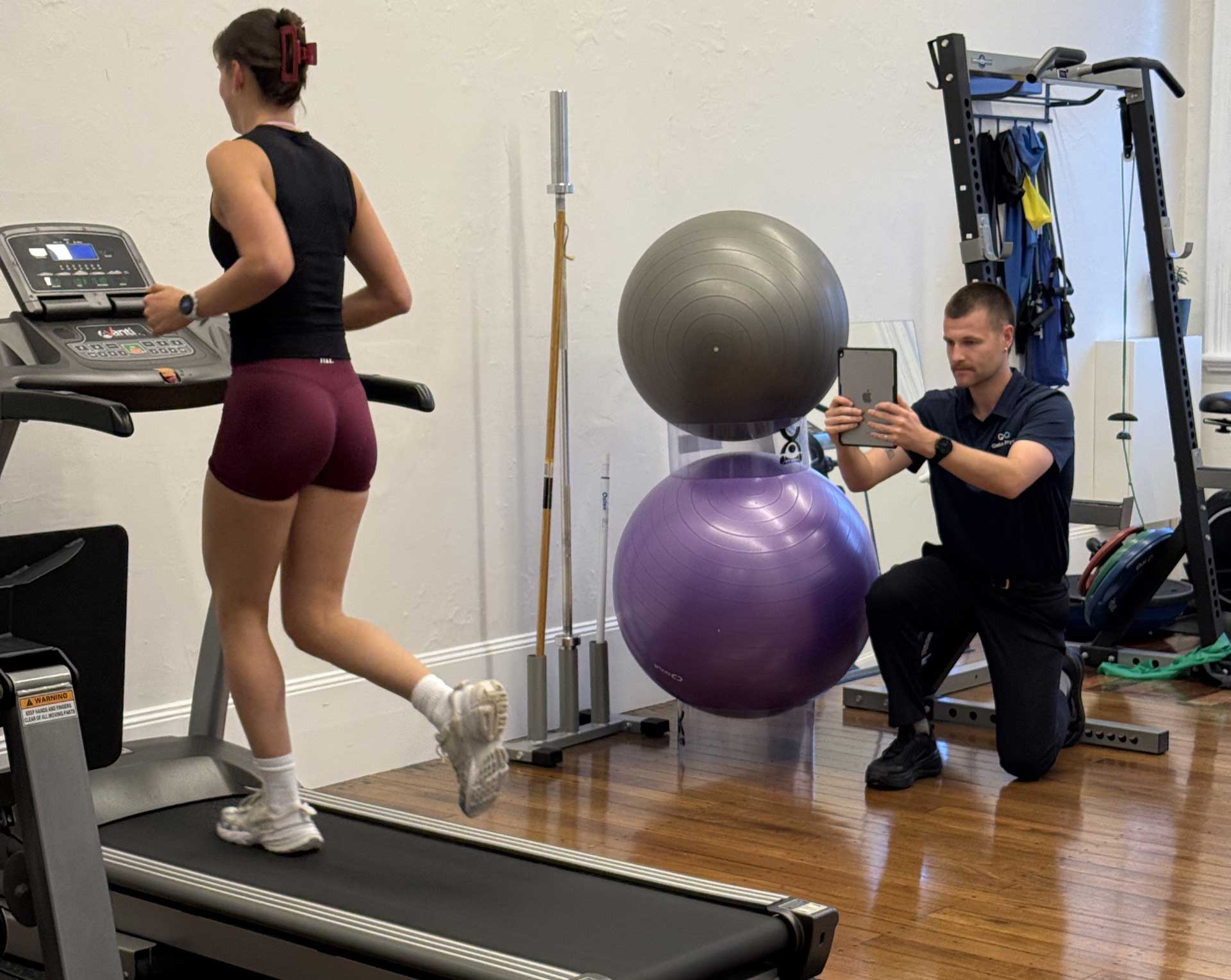
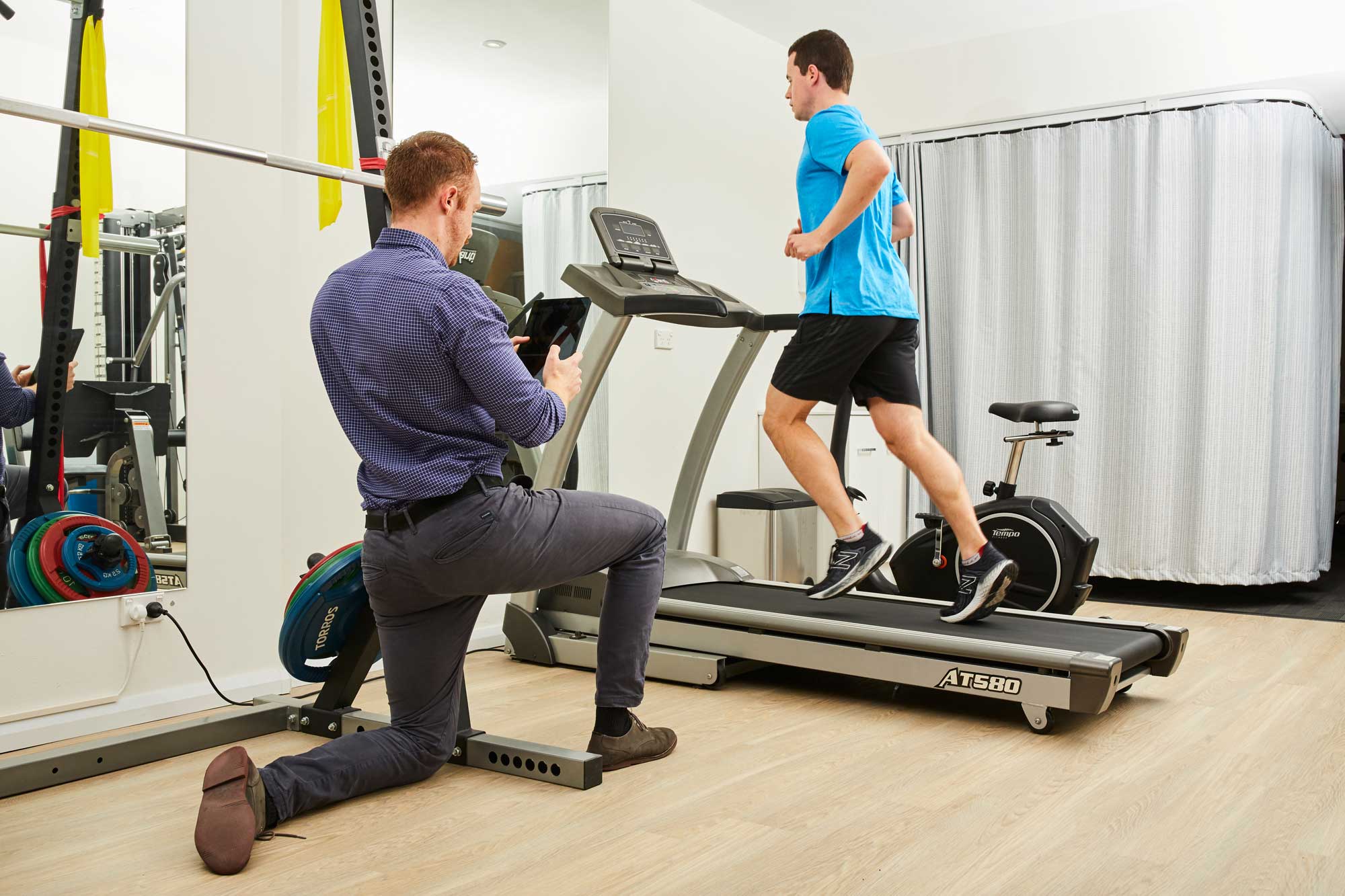
Running analysis is a way to assess a runner’s biomechanics throughout their stride cycle and look for any abnormalities that may contribute to current or future injury. Running analysis may also be useful to identify technique improvements that can increase running economy and speed. At Glebe Physio, we can perform detailed running analysis and provide you with individualised advice that includes:
- Exercises to address any physical deficits and improve strength or range of motion of relevant areas.
- Technique drills to address any biomechanical abnormalities and improve your running form.
- Specific training program advice to ensure you adapt to your improved running form in an efficient way.
We are physiotherapists that understand the mechanics of the human body, and we also understand the importance of working with each individual to achieve a running form that suits their physical structure. No two runners have the same mechanics, and we aim to work with your running style in a subtle way to unlock improvement without overwhelming you.
Why should I have my running technique assessed?
In general, the human body automatically adopts movement patterns that are the most efficient and suitable for the individual, as it learns through repetition and training how to improve its own performance. On many occasions however, the body adopts small abnormalities in the way it moves due to injury, inappropriate footwear or deficiencies in strength and range of motion. During a 30 minute run, each leg will impact the ground 2,700 times, which means that any small abnormalities in running form can quickly lead to injury and affect economy, which results in poor performance.
It is important for all runners to have their running technique assessed, together with a careful assessment of their strength, range of motion and endurance. This can help prevent injury and maximise running speed for any distance.
After an injury, it becomes even more important to assess running form, as the body often adapts to the injury by adopting technique errors that do not necessarily resolve themselves when the injury recovers.