
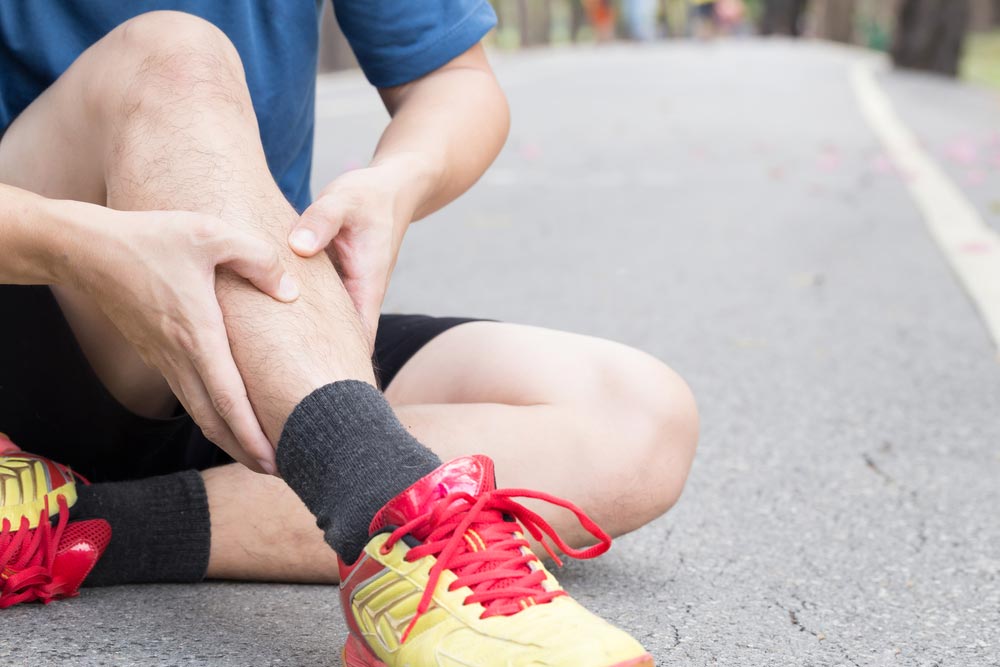
Quick answer: Neither extreme is right. Complete rest usually isn't necessary and can mean losing fitness for no reason, but running through significant pain risks turning a manageable overuse injury into a stress fracture. Current guidance favours relative rest, cutting your running load (often by around half), keeping symptoms below a mild level, and reloading gradually as pain allows, rather than stopping altogether or pushing through (Warden et al., 2021; Moen et al., 2012).
What are shin splints, actually?
"Shin splints", aka medial tibial stress syndrome (MTSS), is pain along the inner edge of the shin bone caused by repetitive overload of the tissue and bone lining (periosteum) where your calf muscles attach. It's one of the most common overuse injuries in runners, especially after a sudden increase in volume, intensity, or a change in surface or footwear. Some researchers have recently argued the name itself is outdated and prefer "load-induced medial leg pain," since it reflects that this is a load-management problem, not a single specific pathology (Winters et al., 2018; Moen et al., 2009; Anderson et al., 2025).
Shin splints or a stress fracture? How to tell the difference
This distinction matters because the "run through it" question has a very different answer depending on which one you have.
- Shin splints (MTSS): pain is usually diffuse - spread along several centimetres of the inner shin, and tends to ease once you've warmed up, then return afterward (Winters et al., 2018; McClure & Oh, 2025).
- Stress fracture: pain is usually focal - you can point to one specific spot and typically worsens through a run and worsens further with each subsequent session (a "crescendo" pattern). It's also more likely to be present at rest or even wake you at night (McClure & Oh, 2025; Warden et al., 2014).
If your pain is pinpoint, getting worse from session to session, or present outside of running, that's a signal to get it assessed ASAP in case it is a stress fracture.
Do I need imaging?
Not usually for straightforward shin splints, it's typically a clinical diagnosis based on your history and how the area feels on assessment. Imaging becomes relevant if a stress fracture is suspected: a plain X-ray can miss an early stress fracture, so an MRI is often used since it picks up the early bone changes that an X-ray won't (Gaeta et al., 2005).
So…Rest, or run through shin splints?
Neither. The current evidence-based approach is relative rest with progressive reloading: (Warden et al., 2021).
- Reduce your running volume - often by roughly half, rather than stopping completely.
- Keep any pain during running at a mild level, and make sure it settles quickly afterwards and isn't worse the next day.
- Cross-train (swimming, cycling, pool running) to maintain fitness while the load through the shin is reduced.
- Gradually increase running load again as symptoms allow, rather than jumping back to your previous volume
Most cases resolve within roughly three weeks to four months with this approach, though this varies a lot depending on how early it's caught and how well training load is managed through reco